Pannon EGTC
news
The Future Forest-Based Economy Takes Shape within the Pannon Future Forest International Cooperation
Information
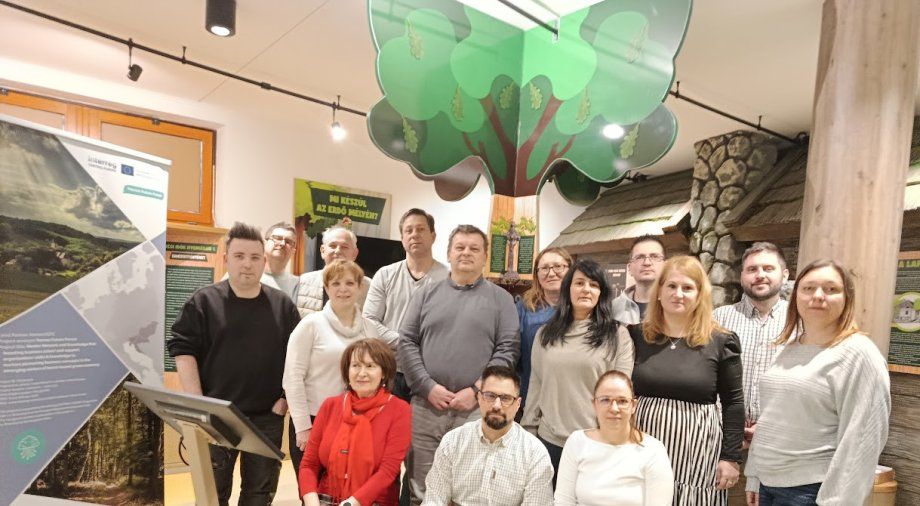
On 28–29 January 2026, the Pannon Future Forest project officially launched with a kick-off event held at the Mecsek Discovery Center in Pécs. The project is co-financed by the Interreg Central Europe Programme. The two-day opening event brings together partners from Hungary, Croatia, Slovenia, and Germany, who are working jointly to open up new, innovative economic opportunities in the green economy linked to forests and wetland ecosystems.
The lead partner of the project is the Pannon European Grouping of Territorial Cooperation (Pannon EGTC), which has been an active participant for many years in cross-border economic development and climate adaptation initiatives. Additional project partners include the Murska Sobota Development Centre (Slovenia), Croatian Forests Ltd. (Croatia), Mecsekerdő Plc. (Hungary), and the Faculty of Economics of Josip Juraj Strossmayer University of Osijek (Croatia).
The project’s professional activities are further supported by Future Forest GmbH & Co. KG (Germany) as a strategic partner — one of Europe’s first knowledge centres specializing in sustainable forest management and climate-based innovations — as well as by the Slovenian Forest Service (Slovenia).
The aim of Pannon Future Forest is to strengthen the competencies of entrepreneurs, landowners, forest managers, and business development organizations by establishing a mentor network and knowledge centre in emerging fields such as carbon sequestration, the biodiversity-based economy, carbon storage, ecosystem services markets, and regenerative tourism.
At the opening event, welcome speeches were delivered by representatives of the host organizations, Pannon EGTC and Mecsekerdő Plc.. Viktorija Dobravec, Programme Officer representing the Central Europe Programme, also joined online and presented the programme’s objectives and strategic importance. As part of the professional agenda, Future Forest GmbH & Co. KG from Germany was introduced as well — one of Europe’s first innovation centres dedicated specifically to sustainable forest management and climate technology solutions.
During the thematic programme day, participants reviewed the project’s professional framework and work plan and jointly began preparing the international Benchmark Study, which aims to map good practices and innovative business models. The afternoon programme also included a site visit at the Mecsek Discovery Center, where participants were able to gain first-hand insight into successful examples of nature-based education and awareness-raising.
The project is of particular importance for the Hungarian–Croatian–Slovenian border region, which is home to outstanding natural assets — including areas of the UNESCO Mura–Drava–Danube Biosphere Reserve — yet is often economically peripheral. The goal of Pannon Future Forest is to ensure that nature conservation and economic development in these regions do not stand in opposition to one another, but instead reinforce each other.
The source of the news is available at this link.